Therapy for Self-Doubt & Low Self-Esteem
Virtual Mental Health Counseling Across New York State

Many people assume confidence is easy to recognize, and that success means someone feels secure in themselves.
But that’s not always true.
For many high-functioning adults, self-doubt is well hidden. They’ve learned how to appear confident—pushing through, performing, and meeting expectations regardless of how they feel internally.
What you don’t see is the constant second-guessing, the pressure, or the self-criticism happening beneath the surface.
This type of self-doubt is often rooted in patterns like negative self-talk, self-limiting beliefs, comparing yourself to others, and people-pleasing (all patterns that effective self-esteem therapy is designed to change).
Does this sound like you?
to everyone else, you look like you’re doing well, but internally, it feels very different.
Maybe you find yourself thinking:
“Why do I feel like I’m not good enough… even when I’m doing well?”
“Why does my confidence take a hit so quickly?”
“Why do “small” things affect me this much?”
Or you might also notice yourself adjusting to other people—saying yes when you want to say no, or prioritizing others’ needs over your own to avoid discomfort, conflict, or disappointment.
You try to be rational. To talk yourself out of it.
But these self-doubts keep resurfacing because:
in the moment… your thoughts feel true.
That’s how negative self-talk and self-doubt reinforce each other, and make the cycle difficult to break on your own. You just keep adjusting, working harder, and expecting to eventually overcome these emotional setbacks.
Yet somehow, it never seems to be enough.
Overcoming Self-Doubt & Building Self-Confidence
Confidence isn’t something you “arrive at.” It shifts depending on what’s happening in your life—and how certain you feel in your ability to handle it.

-
You grew up around people who wanted the best for you. But sometimes, that sounded like:
“You can do better”
“You usually beat [insert teammate/schoolmate/friend’s name]. What happened?”
“That’s good… but not your best”
Over time, those voices stopped staying external. They became how you talk to yourself—forming self-limiting beliefs that still affect how you see yourself today.
Also, many people learned early on to meet expectations and avoid disappointment or conflict. You were taught to people-please and to prioritize others, often at the expense of your own needs.
-
You have a clear picture of what it means to be “doing well” in life. But that picture is a big, zoomed-out version of your life.
Day-to-day, you’re living in the smaller moments:
Repetitive days
Setbacks
Things that don’t go to plan
So even when you’re on track, it doesn’t always feel like it.
And when something goes wrong, your mind doesn’t treat it like a passing moment—it treats it like evidence.
Instead of: “This didn’t go how I wanted.”
It becomes: “See? Something is wrong with me.”
Over time, your confidence starts to feel inconsistent—hard to trust and easily shaken, especially if it’s tied to how others respond to you or whether you feel accepted.
-
It isn’t about a lack of effort. These patterns were learned through repetition—likely long before you were aware of them, so they’ve become automatic.
And when something feels off—when you don’t understand why you’re struggling or why something affected you so much—your mind tries to make sense of it.
It looks for something more concrete; something it can measure and make sense of.
Your mind has likely learned to measure yourself against others to figure out where you stand, because that’s the same pattern you experienced earlier in life.
SO MANY ASK THEMSELVES DAILY…
“Am I good enough?”
When you see others who seem more confident or successful, your mind automatically starts using them as a reference point.
That’s when beliefs begin to form, like:
“If I were really good enough, this wouldn’t be so hard”
“Other people don’t struggle like I do”
“If I mess up, I’ll fall behind”
These are examples of limiting beliefs—patterns that shape how you see yourself and respond to the world.
This is also where people-pleasing patterns can develop.Your focus shifts from “What do I think?” to “How am I coming across?” or “Am I doing this right?”
These patterns shape self-doubt, low self-esteem, and how you respond to yourself. And over time, these thoughts stop feeling like thoughts.
They start to feel like facts.
So self-doubt becomes a pattern—and negative self-talk gets louder, not because it’s accurate, but because it’s familiar.
The problem?
Most people try to fix this by focusing on building their confidence.
But confidence isn’t the foundation; it’s the result.
Real change happens when you begin working on the patterns underneath:
Recognizing and changing self-limiting beliefs
Moving away from all-or-nothing thinking to more balanced thinking
Reducing patterns like people-pleasing and comparing yourself to others
Learning how to care less about what other people think—and more about what actually matters to you
As these patterns shift, something important happens:
You don’t have to force confidence anymore. It starts to build naturally, because the way you think about yourself is changing.
That’s what creates lasting self-esteem.
And that’s the focus of this work.

Meet
Meet Krystle Hearley
New York State Licensed Clinician specializing in cognitive therapy for low self-esteem and self-doubt
Over the past 10+ years, I’ve worked with many people who have always struggled with their confidence, and over time, it became a part of who they are. That impacted their life on a daily basis, from people-pleasing, self-doubt, and feeling overly responsible for how others feel.
While many have tried reading self-help strategies or even tried to “think more positively”, the temporary relief didn’t change the patterns underneath.
That’s because self-doubt isn’t just a mindset problem—it’s a learned way of thinking that becomes automatic over time.
My work focuses on identifying and changing those patterns directly. Not just understanding them, but actively working on how you:
Interpret situations
Evaluate yourself
Respond internally when things don’t go as planned
In our work, we don’t just talk about what’s happening. We’re looking at how your mind is interpreting situations in real time and actively working to change those patterns. This approach supports your emotional growth and helps you build confidence and self-esteem in a way that actually lasts.
My signature framework
The ARDEN Way
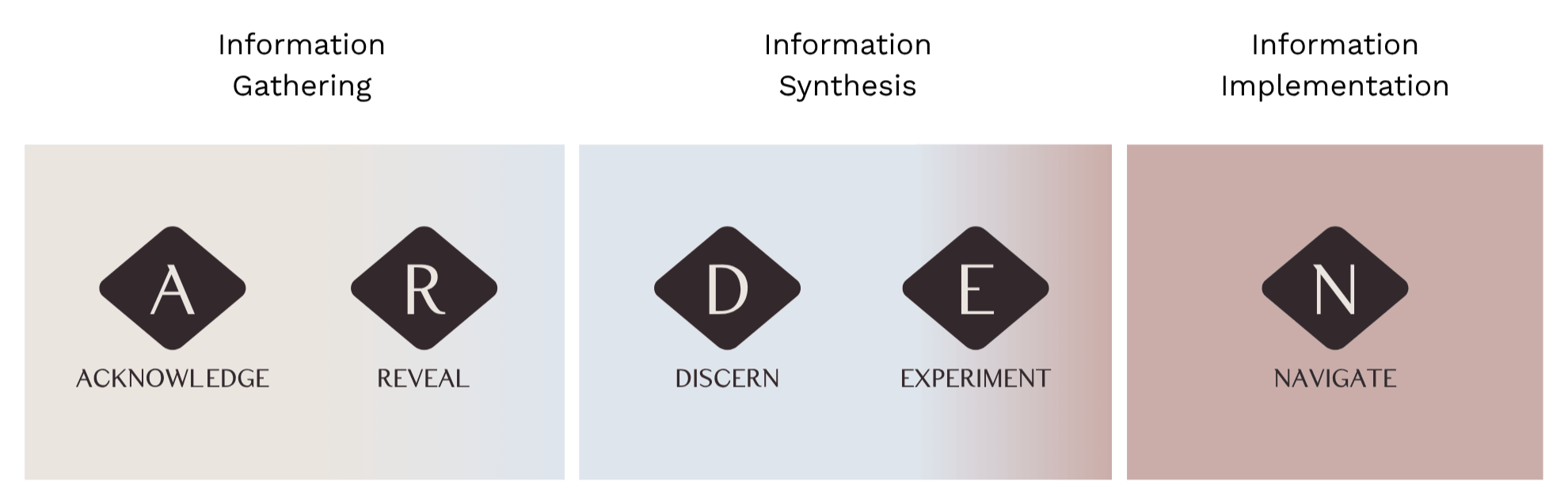
A - Acknowledge What Is
We begin by taking an open and honest look at how these patterns are showing up in your current life.
R - Reveal the Roots
We explore how these patterns developed, especially the early experiences and relationships that shaped how you see yourself.
D - Discern What’s True
You begin questioning long-held beliefs and deciding what is actually true and useful for you now.
E - Experiment with Change
You start applying this work in real time:
Practicing self-acceptance
Taking action without overanalysis
Allowing imperfection without spiraling
N - Navigate with Intention
Over time, you start relying less on external validation and more on your own thinking and judgment, building confidence that feels stable and self-directed.
What Shifts Through This Work
Many begin to notice:
They care less about what people think and rely more on their own judgment
They feel less controlled by fear of judgment, even in situations that used to trigger doubt
They experience a stronger sense of belonging and self-acceptance—without needing to over-adjust, people-please, or constantly seek approval from others
How long does it take to see results?
Most people begin noticing shifts earlier than they expect. Not because everything changes at once, but because the way you start understanding and responding to yourself begins to feel different.
Lasting change takes time.
But meaningful progress often starts sooner than people anticipate.
The way you think about yourself isn’t fixed—it’s learned
And anything learned can be changed
Serving clients across New York State via Teletherapy
Frequently Asked Questions
-
That’s more common than you might think. Many people come in feeling frustrated because they’ve already tried therapy, but nothing really changed. They understood themselves better, but still found themselves stuck in the same patterns, having the same thoughts, and reacting the same way.
That’s because not all therapy approaches focus on what actually creates lasting change. Low self-esteem is usually driven by patterns like negative self-talk, self-limiting beliefs, and how you interpret situations in real time. If those patterns aren’t addressed directly, you may gain insight without feeling different. When therapy focuses on changing those underlying patterns—not just talking about them—self-doubt begins to decrease, and confidence builds naturally as a result. -
Trying to “stop” negative self-talk directly usually doesn’t work. And that’s because those thoughts don’t feel random; they feel true. As you build awareness of your thoughts, including negative self-talk, you can begin to question and respond to them in a more balanced way, instead of just replacing them with something more positive.
The goal is to change how your mind is interpreting situations. When those interpretations shift, the tone of your self-talk changes with it. That’s how negative self-talk becomes easier to handle—not through force, but because it no longer feels as believable.
-
Chronic self-doubt has nothing to do with your actual abilities; it’s a pattern your mind has learned over time.
It often comes from repeatedly questioning yourself, overanalyzing decisions, or tying your sense of worth to outcomes. Over time, that becomes automatic.
To change it, you don’t just try to “be more confident.” You begin identifying and shifting the patterns that keep reinforcing doubt. Then, your thinking becomes more stable, and trust in yourself builds naturally.
-
Lasting confidence isn’t built by pushing yourself harder or trying to make yourself ‘better’. It comes from developing a more balanced and realistic way of thinking; one that doesn’t collapse when things go wrong.
When your confidence is no longer dependent on constant success, approval, or getting everything right, it becomes more consistent, grounded, and reliable.
-
People-pleasing is usually not about being “too nice.” It’s about what feels at stake if you don’t do what you believe you “should”. For many people, saying no, disappointing someone, or setting a boundary feels like it could lead to rejection, conflict, or loss of connection. So your mind learns to prioritize others to avoid that discomfort.
Changing this isn’t about becoming less caring. It’s about becoming less dependent on others’ reactions to feel okay. As that shift happens, boundaries become easier and more natural to maintain.
-
People-pleasing and low self-esteem are closely connected. This behavior is often a result of your sense of worth or being “enough” being tied to how others see you.
Over time, this reinforces the belief that how to evaluate yourself depends on other people. That’s what keeps both people-pleasing and low self-esteem in place. As you build a more internal sense of self-trust and self-acceptance, the need to constantly adjust to others begins to decrease.
-
Comparison often becomes a habit when your mind is trying to figure out how you should feel about yourself—especially in areas where you feel uncertain about yourself. It uses other people as a reference point. The problem is, comparison doesn’t lead to clarity. It usually reinforces self-doubt.
Instead of trying to “stop comparing,” the focus becomes understanding why your mind is relying on it and building a more stable internal way of evaluating yourself that doesn’t depend on others.
-
This isn’t about forcing yourself not to care; it’s about understanding why it feels so important in the first place. When your sense of self is closely tied to how others perceive you, their opinions naturally carry more weight.
As you develop a stronger internal sense of self—based on your own thinking, values, and perspective—you rely less on external validation. That’s when caring less about what people think starts happening naturally.
For more FAQs about our sessions, visit this page.