
Therapy for Relationship Patterns & Setting Healthy Boundaries
at Work, with Friends, and Loved Ones

Virtual Individual Therapy Services Across New York State
You care deeply about the relationships in your life. But you keep ending up in ones that feel unbalanced, confusing, or draining.
You may not have a name for it.
But you can feel that something isn’t working.
Learn how to recognize the patterns you’re stuck in and change them, so your relationships start feeling more secure and fulfilling.
The Truth
About Unhealthy Relationships
Some unhealthy relationships are obvious—constant conflict, disconnection or even abuse.
But many are quietly unhealthy.
They show up as patterns like:
Boundary struggles
Emotional codependency
Anxious avoidant attachment style dynamics (very common)
Emotional invalidation
You may not label it “codependency” or “anxious attachment.”
Or you may have found yourself starting to wonder, “am I codependent?” or “do I have an anxious attachment style?”—especially if these patterns keep repeating.
Either way, you feel it. Something is off, and it keeps happening.
Sounds familiar?
Boundary Struggles
You know you should say no, but you don’t. Or you do, and then feel guilty after. Boundary struggles involve difficulty identifying, communicating, or maintaining your limits, and often lead to giving more than feels right (known as overgiving).
Types of Relationship Patterns That Are Hurting You
Signs of Codependency
You focus heavily on other people’s needs, sometimes to the point of losing sight of your own. These are common codependency signs. They often show up as people-pleasing, fear of conflict, and needing reassurance.
Anxious Attachment vs. Avoidant Attachment
You want closeness, clarity, and reassurance—but the other person pulls away. This is often referred to as an anxious avoidant attachment dynamic, where avoidant behaviors reinforce anxiety and instability.
Signs of Emotional Invalidation
Your feelings are dismissed, minimized, or redirected. These are common signs of emotional invalidation. And over time, this can make you question yourself, suppress your emotions, or feel like you’re “too much.”
Why This Keeps Happening in Your Relationships
These patterns aren’t random—they were learned over time.
They often begin with experiences that shaped your subconscious beliefs about connection, your role in relationships, and what it takes to keep someone.
Experiences that have impact on your belief system:
Emotional invalidation from parents or other adults during childhood
Further emotional invalidation in early romantic relationships
Societal pressure around the importance of relationships and being chosen or loved
Confusion around what people mean when they say “relationships take work”
Over time, your mind tries to make sense of these experiences and forms false beliefs like:
“I can’t be too much… or they’ll leave.”
“If something feels off, I probably just need to try harder.”
“If someone pulls away, it means I did something wrong.”
These beliefs shape how you show up in relationships. You may start to overgive, avoid conflict, seek reassurance, or second-guess yourself.
And eventually, you lose clarity about what YOU feel, want, and need. And that’s when these patterns start repeating—across different relationships, in different ways.
Okay but...
What If I’ve Already Tried to Set Boundaries…But It Didn’t Work?
You might already know this is something you struggle with.
And maybe you’ve already tried learning from books, listening to the podcasts, being very careful about what you say, or even found yourself in therapy before.
And still… nothing really changed.
When therapy doesn’t help, it usually comes down to:
It stayed at the level of venting, not real change
The deeper patterns weren’t addressed
The approach didn’t fit what’d work best for you
Effective therapy should go beyond insight, and lead to real change.
That’s why this work is structured, focused, and built around actually shifting the patterns that keep showing up in your relationships.

Meet
Meet Krystle Hearley
New York State licensed therapist
specializing in anxiety & overthinking
Many people come to me after trying to “fix” a specific relationship and then finding themselves in the same dynamic, just with someone new.
That’s because the issue isn’t just the relationship—it’s the pattern behind it.
It’s the lens you’ve learned to view your connection with others through.
Together, we break down what’s actually happening in your relationships, identify the patterns driving it, and shift how you think, respond, and show up.
So your relationships don’t just look different. They feel different.
Over the past 10+ years, I’ve worked with many thoughtful, self-aware adults who care deeply about others—but felt stuck in patterns they couldn’t break.
The shift didn’t come from trying harder.
It came from understanding the pattern and changing it at the root.
What to expect from
Therapy for Setting Healthy Boundaries in Relationships
This is a form of individual therapy for relationship issues focused on your role in repeating relationship patterns (how you think, feel, and respond).
It isn’t about becoming cold, rigid, or emotionally distant. It’s about creating relationships that feel balanced, respectful, clear, and aligned with who you are.
This work helps you move out of patterns like anxious attachment and codependency—and into more stable, secure ways of connecting with others. By combining insight with practical tools, what you learn will translate into how you show up in real life.
Please note: Newer relationships tend to shift more quickly. Longer-term relationships often require more consistency, reinforcement.
How is this different from just learning communication skills?
Most people think boundary work is about saying things better. But that’s only the surface.
The real challenge isn’t learning what to say; it’s addressing what happens internally when you try. For many, this shows as:
Fear of conflict
Fear of rejection
Guilt
Second-guessing yourself
This is where patterns like emotional avoidance, especially avoiding conflict or discomfort, keep boundaries from sticking. If those aren’t addressed, you can know exactly what to say—and still not follow through.

The ARDEN Way
The structured framework we use in this individual therapy for relationship issues:
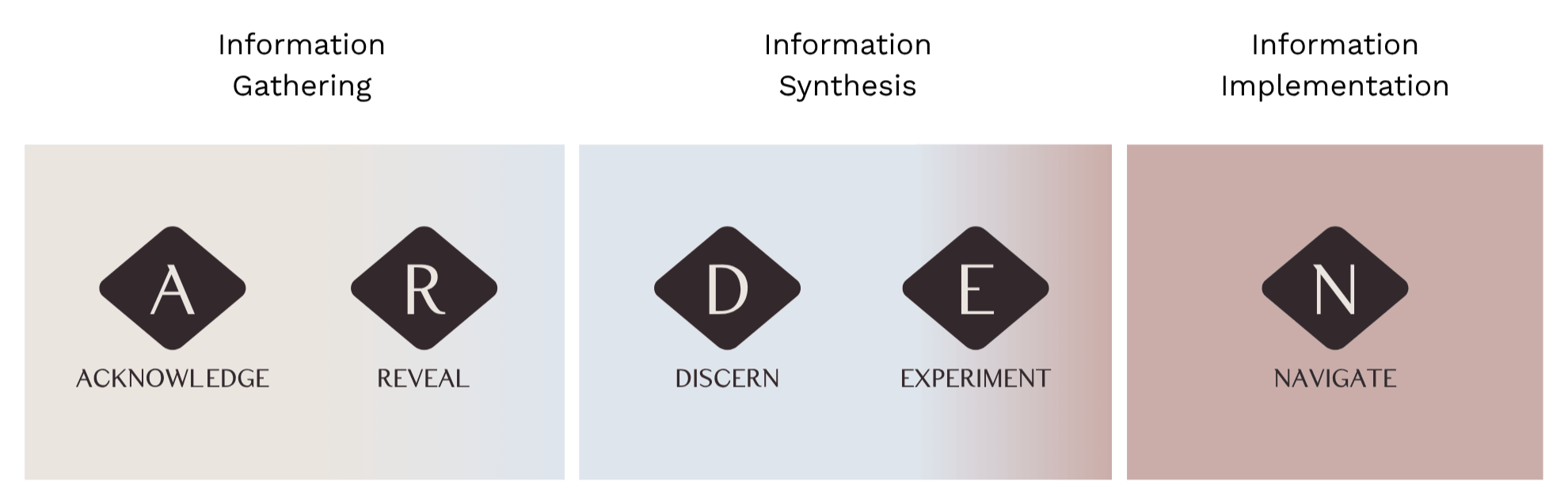
A - Acknowledge What Is
Understand how these patterns are currently showing up in your life.
R - Reveal the Roots
Explore where they developed and why they made sense at the time.
D - Discern What’s True
Challenge the beliefs that are keeping you stuck.
E - Experiment with Change
When you’re ready, begin setting boundaries, expressing yourself, and trying new responses.
N - Navigate with Intention
Build relationships that feel more secure, balanced, and aligned.

Interdependence vs. Codependence
What Actually Changes When I Start Setting Boundaries?
Good news, you don’t lose your ability to care deeply for others. You just stop losing yourself in the process.
My clients often notice:
No more second-guessing themselves after every interaction
Saying what they mean without over-explaining or apologizing
Feeling more steady, even when someone else isn’t
Having clearer expectations for how they want to be treated
You might be wondering if it’s possible for you to ever truly feel secure in a relationship without constant reassurance?
The answer is yes, absolutely. But it doesn’t come from finding the “right” person or getting more reassurance. It comes from changing the patterns underneath how you think, feel, and respond in relationships.
As you shift patterns like anxious attachment and over-reliance on external validation, you start to feel more steady, regardless of what someone else is doing.
This is what interdependence vs. codependence looks like—staying connected to others without losing connection to yourself.
Change doesn’t happen overnight
But with the right approach, it does happen
This work builds healthier relationships, and a healthy relationship is the kind you will enjoy for the rest of your life.
Providing mental health counseling across New York State
Frequently Asked Questions
-
Most relationship patterns aren’t random; they’re learned ways of connecting with another person that develop over time. Patterns like anxious attachment, codependency in relationships, or ongoing boundary struggles tend to repeat until the why behind them is understood and addressed. Even if the person changes, the pattern often stays the same. This is exactly what we focus on in therapy, so you can stop repeating the same relationship dynamic with different people.
-
This is often a sign of an anxious attachment style, where your sense of security depends on consistency and reassurance. In the past, important relationships may not have consistently provided stability or reassurance. Now, even when things are stable, your mind may look for signs that something is off or about to change (because it did in the past). Learning how to deal with anxious attachment involves building internal stability so you don’t rely entirely on the relationship to feel okay. That’s a core part of the work we do.
-
Overanalyzing is usually driven by fear and uncertainty, often tied to an anxious attachment or codependent behavior. Your mind is trying to figure out what something means so you can feel in control. But, in reality, it ends up creating more stress. Therapy helps you reduce this pattern by addressing your fears and need for constant reassurance, and helping you respond to uncertainty in a more grounded way. The goal isn’t to analyze better—it’s to feel more steady without needing to.
-
Guilt around setting boundaries often stems from deeper relationship patterns like codependency or fear of conflict. Even if you know how to set healthy boundaries, it can feel uncomfortable or wrong at first. That’s because the real challenge isn’t just about communicating a boundary—it’s about what comes up internally when you do. In therapy, we work on both the skill of setting boundaries in a relationship and the underlying beliefs that make it hard.
-
If you consistently prioritize others’ needs over your own, feel responsible for their happiness, or struggle with overgiving, you may be experiencing codependency. Common codependency signs include people-pleasing, difficulty saying “no”, and your mood being heavily influenced by the other person’s mood. Many people with high functioning codependency don’t realize it at first because they appear capable and self-aware. Identifying the pattern is the first step. We can cover this in therapy, so you don’t just understand it, but also change it.
-
It’s difficult because setting a boundary isn’t just about saying it; it’s about believing it’s okay to have it and following through when it’s tested. Those moments are often met with uncomfortable inner reactions like fear of conflict or rejection. Even when you understand how to set boundaries, those internal reactions can override it. Therapy for setting healthy boundaries in relationships focuses on helping you work through those barriers so your boundaries actually hold.
For more FAQs about our sessions, visit this page.