
Therapy for Feeling Stuck in Life
for Burnout, Life Transitions, and Feeling Behind

Virtual Mental Health Counseling Across New York State
You’re doing everything “right.”
So why does it still feel like you’re falling behind? Or worse, like you’re stuck in life you no longer want?
If you feel unsure what to do next, you’re not the problem—you’re stuck in a pattern.
Why Do I Feel So Behind in Life?
I commonly hear from clients, “I feel so behind in life.” But when we slow it down, there’s often something else underneath it: feeling stuck.
Feeling behind sounds like, “I should be further along by now.”
Feeling stuck sounds like, “I don’t know how to move forward.”
They can show up together, but they’re not interchangeable—and treating them like they are can keep you spinning instead of moving.
-
When someone keeps asking themselves, “Why do I feel behind in life?” it usually isn’t about their actual progress; it’s about their expectations. And it often intensifies around major life milestones—when life doesn’t match the timeline you expected or see in others.
You can be making real progress and still feel behind.
You’ve been taught (directly and indirectly) that there’s a “right” timeline for success.
And when it feels like you’re not keeping up with it, this often leads to:
Feelings of shame
Sense of Urgency
Comparison to Others
Burnout quietly contributes to these feelings too. When your energy is depleted, your pace slows. It’s easy to interpret this as falling behind rather than recognizing it as moving forward at your current max capacity.
The most common internal narratives clients share with me are:
“I should have figured this out by now,” or
“Everyone else is ahead of me.”
Many people—even those feeling behind in their 20s or 30s—start to question whether they’ve missed something everyone else figured out.
Even when you logically know that’s not fully true, it still shapes how you see yourself.
-
Burnout makes this even worse. It usually shows up as low energy, mental fatigue, and difficulty staying engaged with things that used to feel manageable. And when your energy is low, even simple decisions feel hard. So, you keep thinking instead of acting.
From the outside, it might look like nothing is wrong. But, internally, it feels like friction. Like you should be moving, but you aren’t.Feeling stuck, on the other hand, is more about being unable to move forward, even when you have the energy or desire to do so.
They often overlap. When you’re burned out, your capacity is lower, which makes it harder to take action. And when you stay in the same place too long, that can drain your energy over time—which is why burnout therapy and support can be helpful in rebuilding momentum.
-
Many clients tell me they are "trying" to move forward. But "trying" is a mental state, not an action. If you’re wondering how to stop feeling stuck, the answer isn’t more thinking—it’s breaking the pattern. More thinking just leads to more options, more doubt, and more delay.
Action is the only cure for overthinking.
That’s why the therapy approach requires more than just talking. It needs structure, direction, and a focus on rebuilding momentum.The goal is twofold: to reduce the influence of the comparison, and rebuild the ability to move forward.
Instead of guessing your way forward, we use a clear framework found to help people navigate life transitions, identity confusion, and other periods of personal growth and development.

Momentum doesn’t come from having everything figured out
It comes from taking steps that are small enough to follow through on, and meaningful enough to create traction.
Why do I Feel Stuck in Life?
Feeling stuck in life is the experience of wanting something about your life to change, but not knowing how to make that change happen. It often shows up as staying in the same routines while mentally rehearsing change. Researching, planning, thinking…but not acting.
Emotionally, this often shows up as:
Frustration
Restlessness
Eroding belief in yourself
Periods of transition can create temporary feelings of stuckness, especially when you’re between roles (i.e. student, employee), identities (i.e. new mother, divorced), or clear next steps (i.e., new job, moving).
You begin to question yourself. Decisions feel heavier. Even small actions can feel disproportionately difficult, because they carry the weight of “What if this doesn’t work either?”
If you’re feeling stuck in life and don’t know how to overcome it, recognize that the issue likely isn’t your motivation; it’s more often the patterns you’re stuck in. Your current approach isn’t working for the phase of life you’re in.
Does this sound familiar?
You’re the kind of person who’s used to figuring things out.
You’ve handled hard things before.
You know how to think, plan, and follow through.
Which is why this is so frustrating.
Right now—you can’t seem to get yourself to move forward.
You’ve probably already tried setting goals, researching different paths, trying to “work on yourself”... But none of it is creating real momentum.
Instead, you just keep spiraling over “I feel stuck in life and don’t know what to do.” So you keep thinking through every option and overanalyzing every decision, trying to make sure you don’t choose wrong.
All while something in your life is shifting. Maybe:
You’ve outgrown your current path
You’re in the middle of a transition
What used to make sense no longer does
Part of you wants change.
Part of you has no idea what that change should look like.
And part of you is just tired, while feeling like you can’t afford to slow down.
Over time, it turns into something harder to ignore:
You feel like you’re falling behind in your own life and you don’t know how to fix it.
Feeling Behind in Life & Stuck at the Same Time?
The Double Whammy
“I’m not where I should be, and I don’t even know how to fix it.”
Because these two feelings often show up together, they get blended into one overwhelming experience. Life transitions are a common time for both feelings to creep in—disrupting your momentum (stuck) while also making you question your timing (behind).
Transitions and milestones become reference points for comparison, which can create a sense of being behind even when your path has simply taken a different shape. This is especially true during the commonly known “quarter-life crisis” and “mid-life crisis”.
If you feel like you’re not where you should be and also have no clear idea how to change it, it creates a spiraling cycle: lack of movement reinforces the sense of being behind, and the pressure of feeling behind makes it harder to take action.
When burnout compounds these feelings, many people eventually seek out burnout therapy to address it all. Burnout reduces your ability to move forward while increasing the likelihood that you compare yourself to others who seem to be doing more.

Meet
Meet Krystle Hearley
NYS Therapist Specializing in Therapy for Life Transitions, Burnout, and Feeling Stuck in Life
Over the past 10+ years, I’ve worked with many adults who are driven and highly capable of achieving whatever they want in life. Yet, they start to believe they haven’t figured something out that everyone else has.
They come to me at the point where what’s always worked for them… isn’t working anymore.
I help them identify and change the patterns in their thinking that are creating pressure, urgency, and overwhelm.
My work is especially helpful for professionals experiencing burnout, career transitions, or periods of personal and professional growth that feel overwhelming.
Your feelings aren’t coming from your circumstances; they’re coming from how your mind is interpreting them.
Feelings such as:
Overwhelmed
Burned out
Unsure what to do next
Like something is wrong with them
This is important to understand: feeling behind is NOT a sign that something is wrong with you. You’ve just been measuring your life using rules that don’t actually work for you.
Introducing
The ARDEN Way
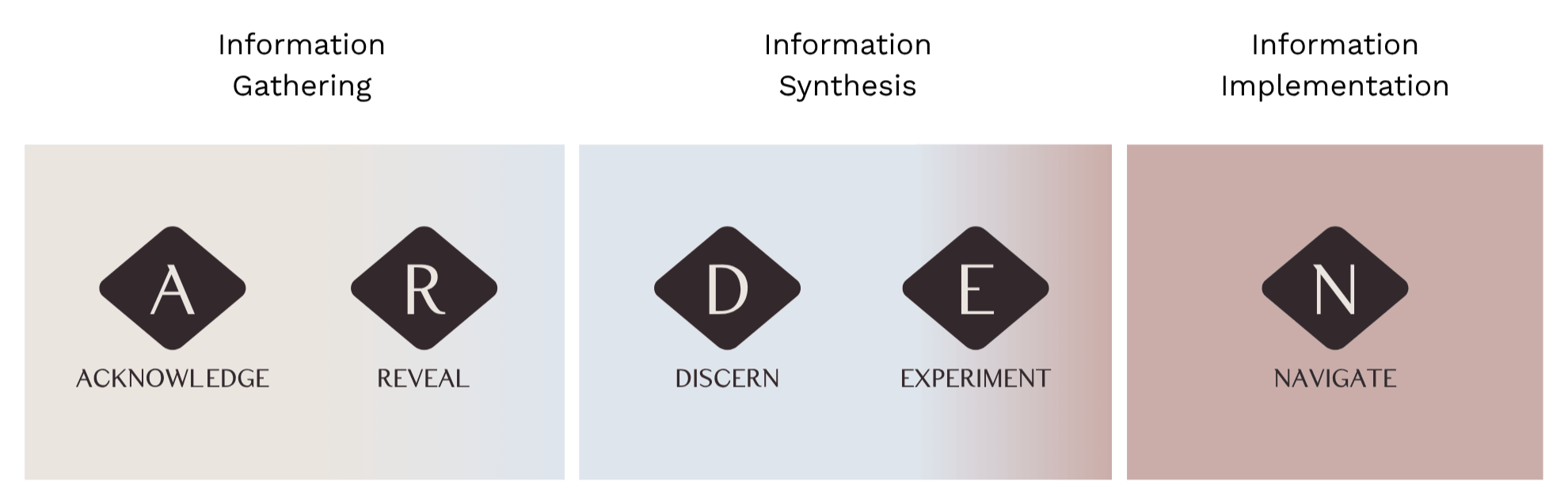
Instead of guessing your way forward, we use a clear framework found to help people navigate life transitions, identity confusion, and other periods of personal growth and development.
A - Acknowledge What Is
We get clear on your current reality—what’s happening, how you’re thinking about it, and what’s keeping you stuck.
R - Reveal the Roots
We look at where these patterns came from: expectations, experiences, and beliefs you’ve internalized over time.
D - Discern What’s True
We challenge the beliefs that are no longer helping you and begin separating facts from assumptions. Clients often tell me this is the point where they started to feel like themselves again.
E - Experiment with Change
You start taking action in a more intentional, less pressured way—without overanalyzing every decision.
N - Navigate with Intention
Over time, you build confidence in your decisions and move forward without constant pressure or comparison.
Over time, many clients begin to notice:
Less pressure around timelines
Less tendency to interpret slow periods as failure
More clarity about what they actually want
A stronger sense of direction
They also notice a shift away from the need for instant gratification. They start feeling less urgency for a fix or comfort, and more confidence in their own pace.
Instead of feeling like life is happening to you, you can bring your decisions to fruition and shape your own path.
What Changes Through This Work
Imagine making decisions without questioning them, and actually following through on them!
What actually changes when I stop feeling stuck?
The biggest shift isn’t that you suddenly have everything figured out. But instead of trying to find the perfect path, you’re able to take steps, adjust as you go, and build momentum forward again. Decisions feel more doable, and you’re no longer stuck in analysis and fear.
You’ll likely notice changes in how you relate to uncertainty and pressure. The need to get it “exactly right” starts to loosen, and you begin to trust your ability to handle what comes next. That shift—from hesitation to movement—is what creates real progress, even if your direction is still evolving.
How long does it take to see results?
Most people start to notice shifts early on. These changes may not be dramatic at first, but they’re meaningful because they signal that the pattern keeping you stuck is starting to shift.
The goal isn’t quick fixes; it’s building a different way of thinking and responding that continues to work over time. As that develops, progress tends to feel more consistent and less forced.
this is where things can start to shift for you
Fill out my inquiry form and, if it seems like a good fit, I'll reach out to schedule a complimentary 15-minute intro call.
Frequently Asked Questions
-
That feeling usually stems from expectations. You form expectations based on what you observe or hear from other people, and over time, those become an internal timeline for how your life “should” go.
If you’ve been thinking, “Why do I feel behind in life?” or noticing a constant sense of feeling behind in life, it’s often tied to those expectations.
When your life doesn’t match those expectations, it creates a sense that something is off (even if your path actually makes sense for you). The more you focus on where you “should” be, the less you recognize how well you’re doing presently.
-
Not knowing what you want is part of feeling stuck, not a separate problem. And it’s especially common when dealing with burnout or major life transitions, when your usual sense of direction is disrupted.
When you feel behind or under pressure to “figure it out,” it can actually make clarity harder to access. You end up overthinking, overanalyzing, and trying to choose the “right” path.
Therapy can help by slowing that process down and getting you out of your head long enough to see patterns more clearly (i.e., what pulls your interest, what drains you, how you tend to make decisions, and where you get stuck).
It can help you separate external expectations from your actual preferences. This can be especially helpful in seasons where everything feels uncertain.
-
If you’ve tried it but still feel stuck or behind in life, it usually means the therapy you had didn’t directly address what’s keeping you there.
Not all therapy approaches focus on those patterns in a practical, change-oriented way. Some stay at the level of insight, which helps you understand why you feel this way, but not necessarily helps you shift it.
More thinking isn’t what gets you unstuck—movement does.As cycles of overthinking continue, the nervous system’s stress response stays activated, making it harder to relax when you want to. This is why overthinking therapy focuses on both emotional regulation skills and changing how you respond to your thoughts, rather than just trying to calm them temporarily.
-
The fear of making the wrong move is often what keeps you from making any move at all.
If you’re trying to figure out what to do when you feel stuck in life, it can help to stop focusing on the “perfect” decision. Instead, take smaller steps that allow you to adjust as you go. That way, you’re not committing to something irreversible—you’re learning through experience.
-
It’s common to expect a clear answer before taking action—but for most people, it works the other way around. This is especially true during life transitions or periods of personal growth, when your direction isn’t as defined.
In those moments, focusing on one clear, manageable step is more useful than trying to define your entire future. Over time, patterns start to emerge—and that’s where direction becomes clearer.
-
That thought often shows up alongside feeling behind in life—especially when you’re comparing your timeline to others.
Time itself isn’t the issue—how you approach your next steps is what matters. When you shift your focus from “catching up” to making aligned decisions, you start building forward in a way that actually sticks.
You’re not starting back at zero—you’re starting here and now, with accumulated experience.
-
What tends to work is shifting how you approach decisions and action.
That might look like narrowing your focus instead of expanding it, lowering the pressure around outcomes, and taking steps that are realistic enough to follow through on. As those steps accumulate, they create momentum—and momentum is what gets you unstuck.
You don’t need a complete plan to move forward. You just need a way to start that you can actually sustain.
For more FAQs about our sessions, visit this page.
You don’t need more time to think
What you need is a different way to move forward—and a way to follow through on it.
Providing teletherapy for life transitions, milestones, and feeling stuck in life for adults across New York State